

Custom WordPress Website Design: A Complete Guide for Modern Businesses
https://www.indianwordpressexperts.com/wp-content/uploads/2026/09/ChatGPT-Image-Sep-14-2026-08_20_59-PM-1024x573.png 1024 573 admin admin https://secure.gravatar.com/avatar/ceb7f684f6c20730fc00f6a6d55ffd88?s=96&d=mm&r=gA professionally planned custom WordPress website design can help a business create a distinctive online presence while maintaining the flexibility of WordPress as a content management system. Unlike a generic template that may look similar to hundreds of other websites, a customized approach allows the website structure, visual identity, functionality, navigation, and content experience to be aligned with specific business objectives. WordPress is particularly useful because businesses can manage pages, blogs, images, and other content through an administrative dashboard.
What Is Custom WordPress Website Design?
Custom WordPress website design means building a WordPress website around a business’s specific requirements rather than relying entirely on an off-the-shelf theme. The process can involve custom layouts, tailored templates, specialized functionality, responsive interfaces, optimized navigation, and integrations with other business tools.
The objective is not simply to make a website visually attractive. A well-planned website should also provide a logical user journey, support search engine optimization, load efficiently, work across different devices, and make content management practical.
WordPress provides a strong foundation for this approach because its ecosystem supports themes, plugins, content management, ecommerce functionality, SEO tools, and custom development.
Why Businesses Choose a Customized WordPress Website
A website is often the first major interaction between a potential customer and a company. Therefore, design decisions can influence credibility, usability, and conversions.
The major advantages include:
- Unique brand presentation: Layouts, typography, imagery, colors, and visual elements can be developed around the brand.
- Better user experience: Navigation and page structures can be designed according to how visitors actually search for information.
- Greater flexibility: Custom functionality can be developed when standard plugins cannot adequately meet a requirement.
- Content management: Businesses can update many types of content through the WordPress dashboard.
- SEO-ready architecture: Website structure, headings, URLs, metadata, internal links, and technical elements can be planned with search visibility in mind.
- Responsive performance: Pages can be designed to adapt to desktops, tablets, and smartphones.
A customized website can therefore combine the convenience of a CMS with a design and functionality strategy tailored to the organization.
Essential Elements of Custom WordPress Website Design
Effective custom WordPress website design involves considerably more than selecting colors and arranging images. Several technical and strategic components need to work together.
1. Responsive Design
A modern website must function properly across different screen sizes. Responsive design automatically adjusts layouts, typography, images, menus, and interactive elements according to the visitor’s device.
Mobile usability is especially important because a significant proportion of web browsing takes place on smartphones. A responsive interface can also make forms, menus, product pages, and calls to action easier to use.
2. Clean Website Architecture
Website architecture determines how pages are organized and connected. A logical structure helps visitors find information quickly and allows search engines to crawl and understand the website more effectively.
Important considerations include:
- Clear navigation menus
- Logical page hierarchy
- Descriptive URLs
- Internal linking
- Proper heading structures
- Organized categories
- XML sitemap configuration
A strong architecture becomes increasingly important as a website grows.
3. Performance Optimization
Website speed affects both usability and search performance. Heavy images, unnecessary scripts, excessive plugins, poor hosting configurations, and inefficient code can contribute to slower pages.
Performance optimization may include image compression, browser caching, code optimization, database maintenance, content delivery networks, and careful plugin selection.
The objective should be to deliver the functionality users need without adding unnecessary technical overhead.
4. SEO-Friendly Development
SEO should not be treated as something that is added only after a website has been launched. Custom WordPress website design provides an opportunity to incorporate SEO considerations during planning and development.
These may include:
- Search-friendly URL structures
- Optimized title tags and meta descriptions
- Proper H1, H2, and H3 hierarchy
- Image alt text
- Structured data where appropriate
- Internal linking
- Mobile optimization
- Crawlable navigation
- Canonicalization
- XML sitemaps
A technically sound foundation makes subsequent content and SEO campaigns easier to manage.
Custom Themes vs. Pre-Made Themes
One of the most important decisions is whether to use a pre-built theme or create a more customized theme structure.
Pre-made themes can be useful for businesses with straightforward requirements, limited budgets, and standard layouts. They can accelerate development because many design components are already available.
However, businesses requiring a distinctive interface may benefit from a custom approach. Custom development can reduce dependence on unnecessary design elements and allow developers to build layouts around actual requirements.
The right choice depends on the project’s scope rather than the assumption that one approach is universally superior. WordPress can support both conventional websites and significantly customized implementations.
Plugins and Custom Functionality
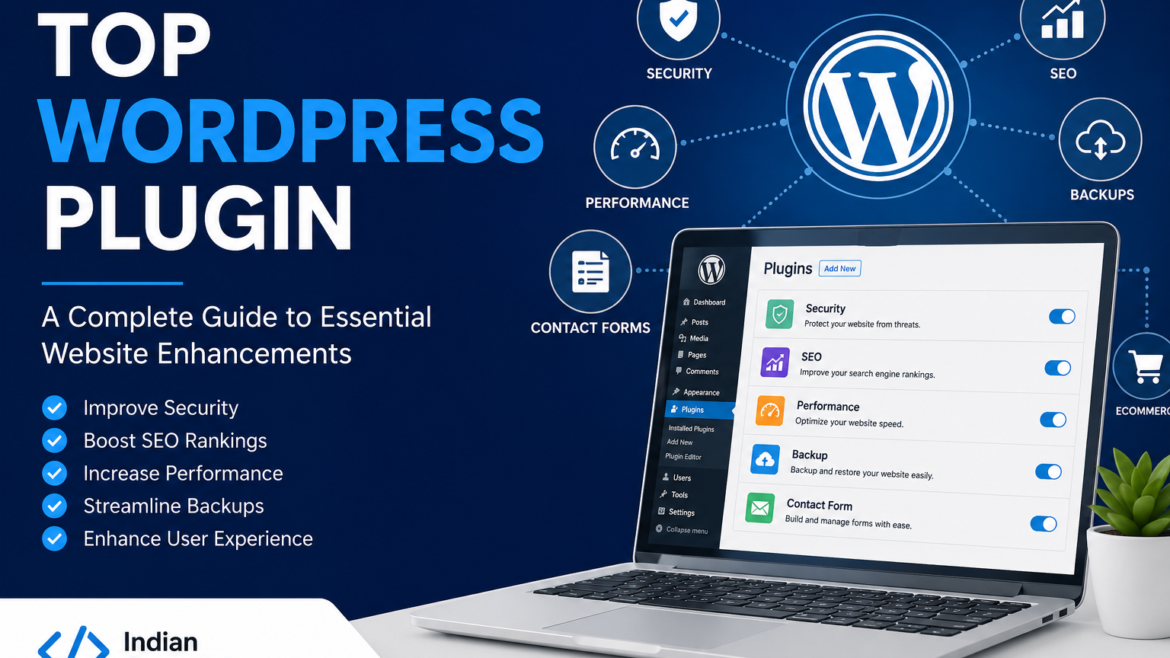
Plugins are one of WordPress’s major strengths. They can provide features such as contact forms, ecommerce, analytics integration, SEO management, security controls, booking systems, and other functionality.
However, installing too many plugins without evaluating their necessity can create maintenance and performance challenges. Plugin compatibility and security should also be considered.
When an existing plugin cannot provide the required functionality, custom plugin development may be appropriate. Indian WordPress Experts, for example, lists WordPress Plugin Development alongside theme design, PSD-to-WordPress conversion, SEO, security, and blog setup among its services.
How Custom Design Supports Business Goals
A website should be designed around measurable objectives rather than aesthetics alone. Before development begins, businesses should identify what they want visitors to accomplish.
For example, the primary objective might be:
- Requesting a quotation
- Calling the business
- Completing a contact form
- Purchasing a product
- Booking an appointment
- Downloading information
- Reading educational content
- Registering for a service
These objectives can influence navigation, page hierarchy, calls to action, landing-page layouts, forms, and content placement.
This is where custom WordPress website design becomes particularly valuable: the website can be structured around the business’s actual customer journey instead of forcing business information into a predetermined template.
Final Thoughts
A successful WordPress website should be more than an attractive collection of pages. It should provide a clear user experience, support business objectives, remain manageable for administrators, and have a technical foundation that can evolve as requirements change.
Custom WordPress website design can be a practical solution for businesses that want WordPress’s content-management advantages while achieving a more distinctive design and tailored functionality. The most effective projects balance appearance with usability, performance, SEO, security, accessibility, and long-term maintainability.
For businesses evaluating a WordPress project, Indian WordPress Experts provides services covering design, development, SEO, security, and WordPress-related solutions.